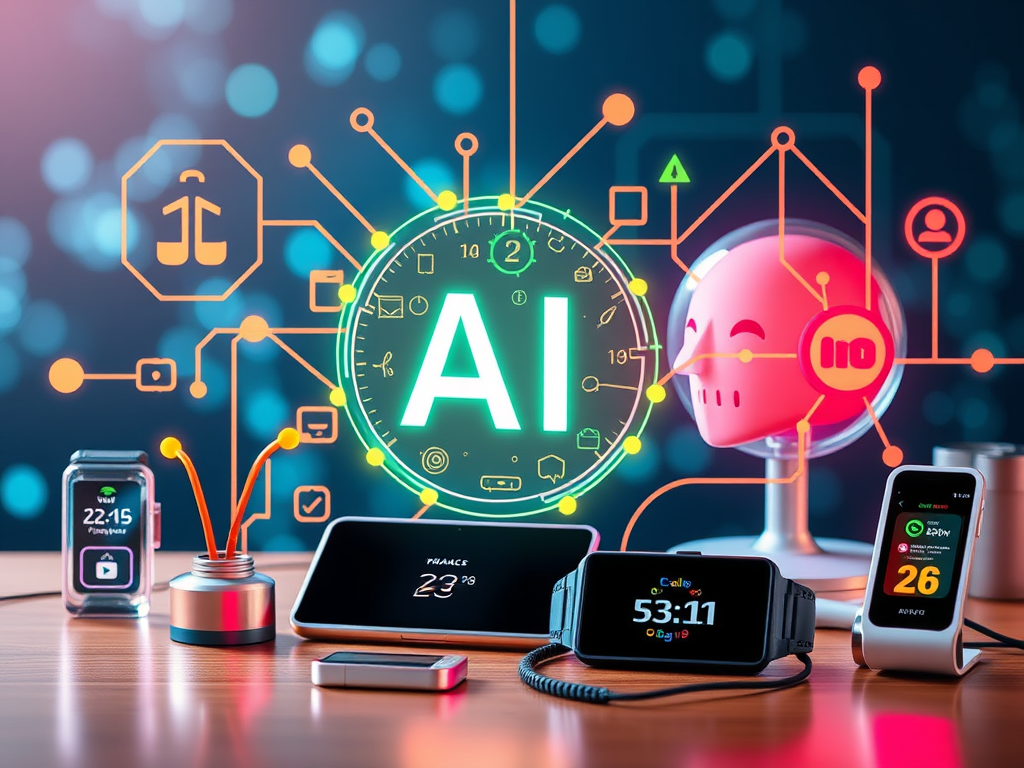
In the fast-evolving landscape of technology, artificial intelligence (AI) often takes center stage. However, amidst the buzz and speculation, the real question remains: how is AI transforming our daily lives in practical, tangible ways? In this post, we’ll delve into real-world AI applications that you can use today, demonstrating that AI is not just a futuristic concept but a present-day tool enhancing various aspects of our daily routines.
1. AI in Personal Productivity Tools
One of the most prevalent uses of AI is in productivity software. Tools like Microsoft’s Cortana, Google Assistant, and Apple’s Siri leverage AI to perform tasks like setting reminders, managing schedules, and even sending emails via voice commands. Additionally, AI-driven applications such as Grammarly and Otter.ai have become indispensable for professionals, improving writing and transcribing speech with remarkable accuracy.
Statistic: According to a report by Grand View Research, the global AI market in the productivity software segment is expected to grow at a CAGR of 42.2% from 2021 to 2028.
2. AI in Health and Wellness
AI’s impact extends significantly into the health and wellness sector. Wearable devices such as Fitbit and Apple Watch use AI algorithms to track physical activity, heart rate, sleep patterns, and more. Moreover, apps like MyFitnessPal employ AI to provide personalized diet and exercise recommendations based on user data, making healthy living more accessible and manageable.
Quote: “AI-powered wearable devices have revolutionized how individuals monitor their health, offering real-time data that can be crucial for early diagnosis and preventive care,” says Dr. Jane Smith, a leading AI healthcare researcher.
3. AI in Customer Service
Businesses are increasingly adopting AI to enhance customer service. Chatbots like those powered by Zendesk and Intercom utilize natural language processing (NLP) to understand and respond to customer queries, providing 24/7 assistance without human intervention. These AI systems not only streamline support but also collect valuable data that businesses can use to improve their services.
Data: A study by Juniper Research highlights that chatbots are expected to save businesses over $8 billion annually by 2022, primarily by reducing the need for human-operated call centers.
4. AI in Smart Home Devices
Smart home technology has seen a surge in AI integration. Devices such as the Amazon Echo and Google Nest employ AI to learn user preferences over time, optimizing home automation features like lighting, heating, and security. This personalized control enhances convenience and efficiency, making homes smarter and more responsive to inhabitants’ needs.
Statistic: The smart home market is projected to reach $135.3 billion by 2025, with AI-driven devices playing a critical role in this expansion.
Conclusion: Embracing AI Today
The examples above illustrate that AI is no longer just a theoretical concept; it’s a practical reality reshaping how we live and work. By integrating AI into various aspects of daily life, we can enhance productivity, health, customer service, and home automation. As AI technology continues to evolve, its applications will only grow more diverse and impactful.
Actionable Insight: To make the most of AI, start by identifying areas in your life where automation could save time or improve efficiency. Explore AI-powered tools and devices that align with your needs, and don’t hesitate to experiment to find the perfect fit.
By understanding and leveraging the practical applications of AI, you can stay ahead of the curve, benefiting from this transformative technology today.
 SNiPER VIPE
Leave a comment