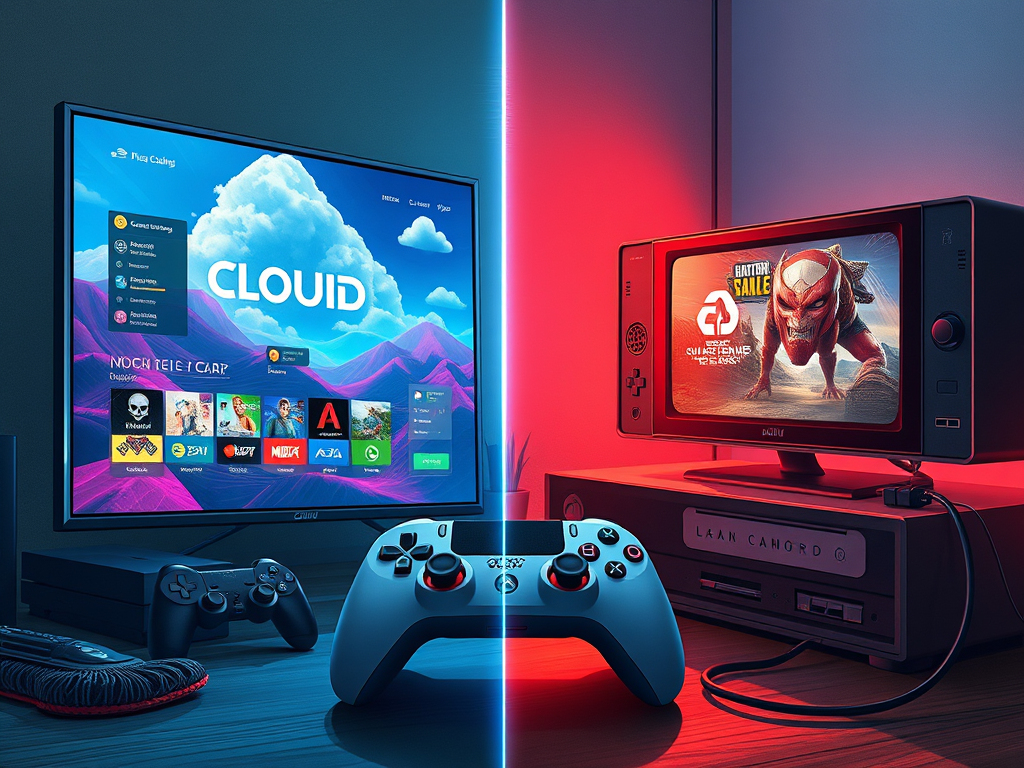
The gaming industry is at a pivotal crossroads, with cloud gaming and traditional consoles vying for dominance. This shift in the gaming landscape raises the question: Is the future of gaming in the cloud, or will consoles maintain their stronghold? In this article, we explore the pros and cons of both, providing insights for tech-savvy readers keen on understanding the future of gaming.
What is Cloud Gaming?
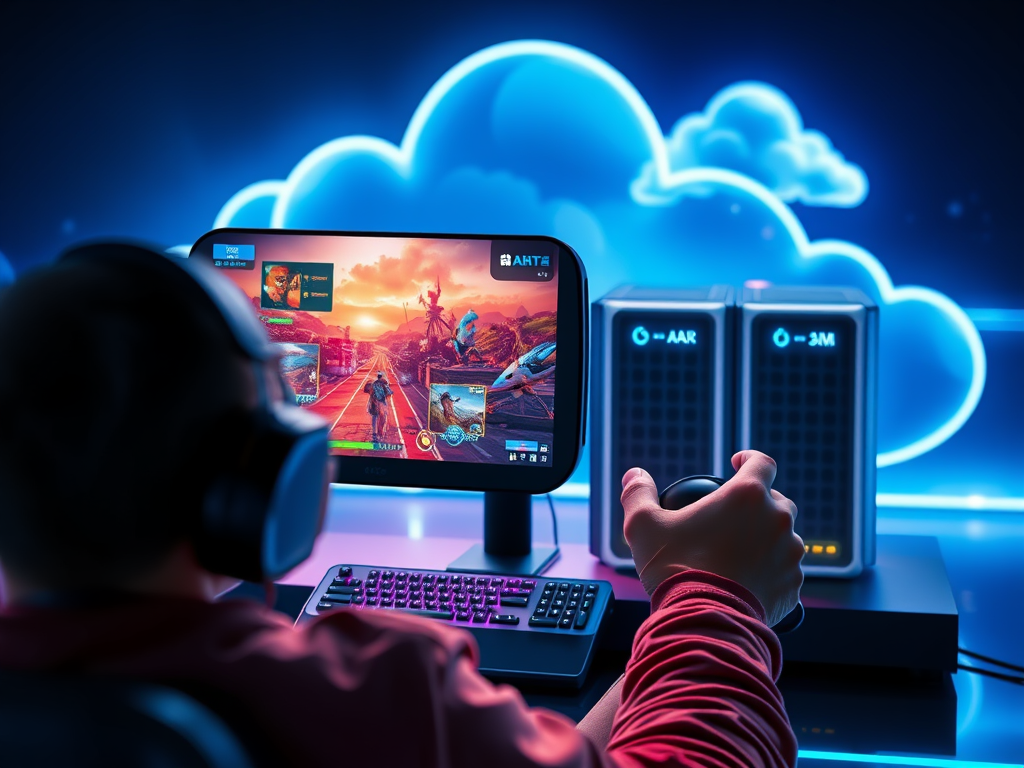
Cloud gaming, also known as game streaming, allows players to run games on remote servers and stream them directly to their devices. This technology eliminates the need for high-end hardware, as the heavy lifting is done in the cloud.
Benefits of Cloud Gaming
- Accessibility: Cloud gaming services like NVIDIA GeForce Now, Xbox Cloud Gaming, and Google Stadia enable players to access high-quality games on various devices, from smartphones to smart TVs, without the need for a powerful gaming console or PC.
- Cost Efficiency: By subscribing to a cloud gaming service, players can avoid the upfront cost of purchasing expensive hardware. This can be particularly appealing for casual gamers.
- Instant Play: There is no need to wait for game downloads or updates. Games are ready to play instantly, enhancing the user experience.
Challenges of Cloud Gaming
- Internet Dependency: A stable and fast internet connection is crucial for a smooth cloud gaming experience. Latency and bandwidth issues can significantly impact gameplay.
- Game Library Limitations: Cloud gaming services may not offer the same extensive library as traditional consoles, limiting game choices for some players.
- Ownership: Unlike buying physical or digital copies, cloud gaming often operates on a subscription model, meaning players don’t own the games they play.
The Legacy of Traditional Consoles
Traditional gaming consoles like the PlayStation 5, Xbox Series X, and Nintendo Switch have been the cornerstone of gaming for decades. They offer a dedicated gaming experience with powerful hardware tailored to run the latest games seamlessly.
Advantages of Traditional Consoles
- High Performance: Consoles are built to deliver optimal gaming performance, often with exclusive titles that take full advantage of the hardware.
- Offline Play: Unlike cloud gaming, traditional consoles do not require an internet connection for most games, making them more versatile in areas with poor connectivity.
- Game Ownership: Players can purchase physical or digital copies of games, ensuring long-term access without relying on a subscription service.
Drawbacks of Traditional Consoles
- High Initial Cost: The upfront cost of consoles and additional accessories can be a barrier for some players.
- Physical Space: Consoles and their peripherals require physical space, which might be a constraint for users with limited room.
- Upgrade Cycle: Console generations change every few years, necessitating hardware upgrades to enjoy the latest games and features.
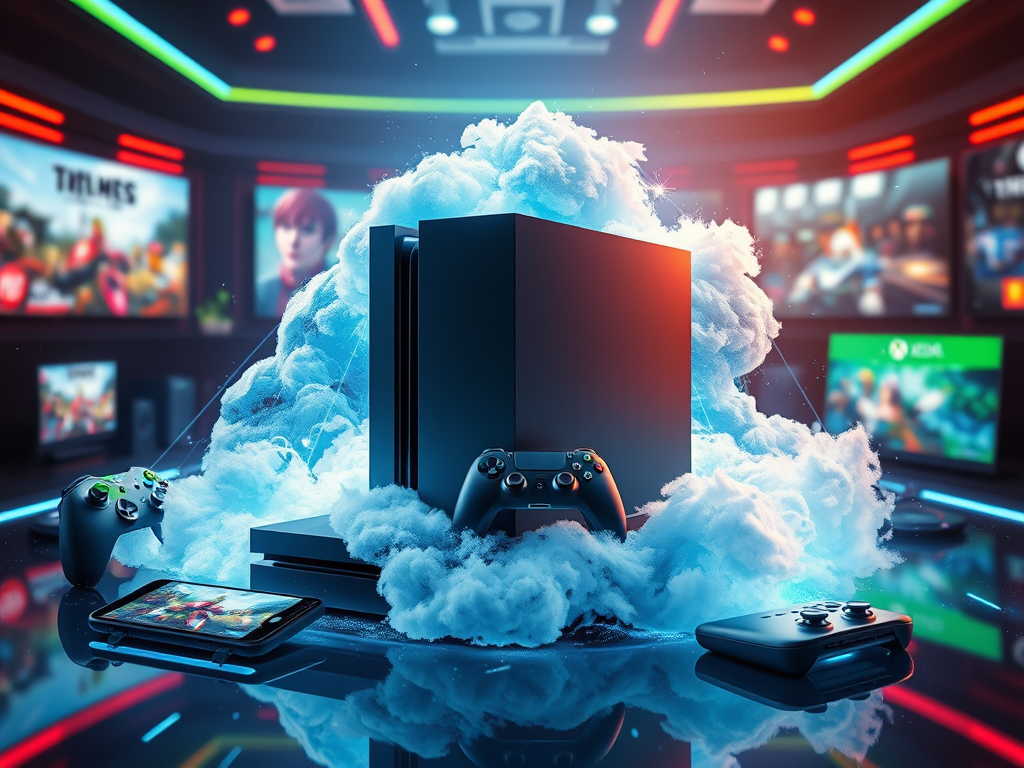
Cloud Gaming vs. Traditional Consoles: A Comparative Analysis
| Feature | Cloud Gaming | Traditional Consoles |
|---|---|---|
| Accessibility | High – Play on various devices | Medium – Requires specific hardware |
| Cost | Low – Subscription-based | High – Upfront hardware and game costs |
| Performance | Variable – Depends on internet quality | Consistently high – Optimized for gaming |
| Game Library | Limited – Depends on service provider | Extensive – Includes exclusive titles |
| Ownership | Subscription-based – No ownership | Purchase-based – Full ownership |
| Internet Dependency | High – Requires stable internet | Low – Many games can be played offline |
Recent Developments and Trends
Advancements in Cloud Gaming
With the rise of 5G and improved broadband infrastructure, cloud gaming is becoming more viable. Companies like Microsoft and Sony are investing heavily in cloud technology, indicating a potential shift in their future strategies.
Console Innovations
Meanwhile, console manufacturers continue to innovate. The latest consoles boast features like ray tracing, ultra-fast SSDs, and integration with VR technology, keeping them relevant in a rapidly evolving market.
Conclusion: What’s Next?
Both cloud gaming and traditional consoles have their merits and cater to different segments of gamers. Cloud gaming is ideal for those seeking flexibility and lower costs, while traditional consoles offer a premium, high-performance gaming experience.
Actionable Insights
- For Casual Gamers: Cloud gaming offers a cost-effective entry into the gaming world without the need for expensive hardware.
- For Hardcore Gamers: Traditional consoles remain the best choice for an immersive, high-performance gaming experience with a vast library of games.
- For Tech Enthusiasts: Keeping an eye on advancements in both areas can help make informed decisions on future gaming investments.
As technology continues to evolve, the line between cloud gaming and traditional consoles may blur, offering even more innovative ways to enjoy gaming.
 SNiPER VIPE
Leave a comment