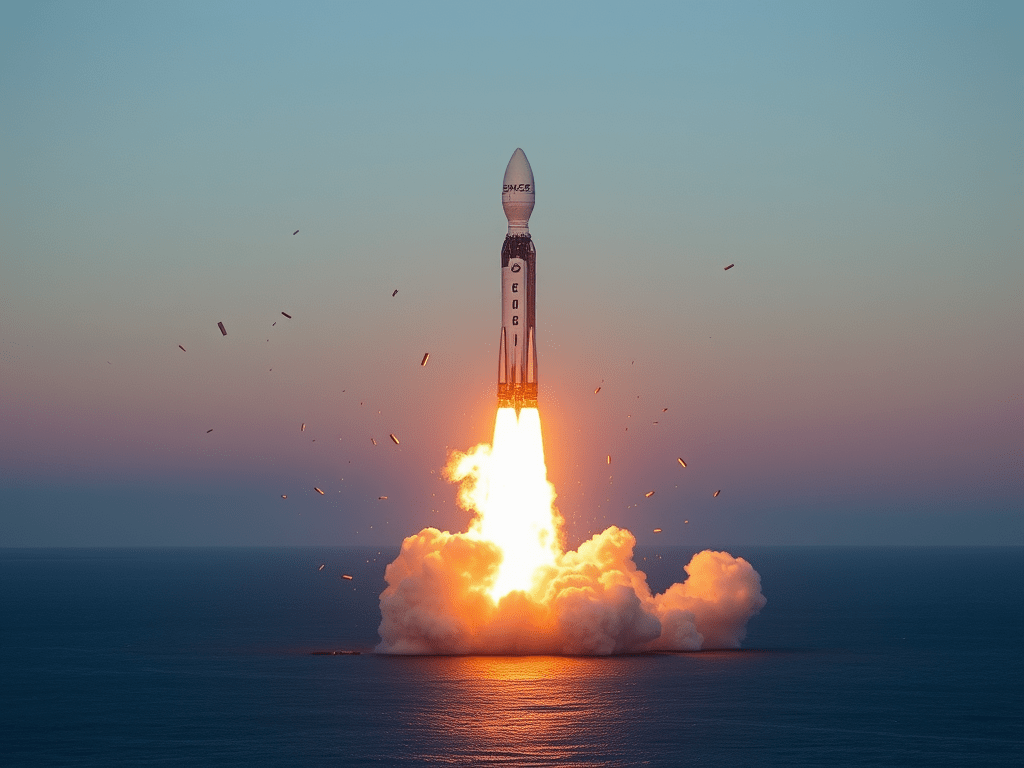
On January 16, 2025, SpaceX’s Starship rocket experienced a catastrophic failure during its seventh test flight, just minutes after launch from Boca Chica, Texas. The spacecraft, carrying 10 dummy satellites, exploded mid-air, sending debris over the Gulf of Mexico and prompting flight diversions. Elon Musk, SpaceX’s CEO, described the incident as “barely a bump in the road,” maintaining optimism despite the setback.

The Nature of the Failure
Preliminary investigations suggest that an internal fuel leak led to a fire, causing the Starship to implode. SpaceX suspects that pressure built up in the rocket’s cavity due to a liquid oxygen fuel leak, sparking a fire that resulted in the catastrophic failure during liftoff.
Implications for Space Exploration
While SpaceX remains optimistic, this incident underscores the inherent risks of space exploration. The explosion not only resulted in the loss of valuable equipment but also disrupted air traffic, highlighting the need for stringent safety protocols. The Federal Aviation Administration (FAA) has initiated an investigation, which could delay future test flights and impact SpaceX’s timeline for missions to the Moon and Mars.
Conclusion
SpaceX’s Starship test flight failure serves as a stark reminder of the challenges in advancing space technology. While setbacks are part of the journey, they also provide critical lessons to enhance safety and reliability in future missions. As the space industry continues to evolve, it is imperative to balance ambition with caution, ensuring that each step forward is grounded in thorough testing and risk assessment.
 SNiPER VIPE
Leave a comment